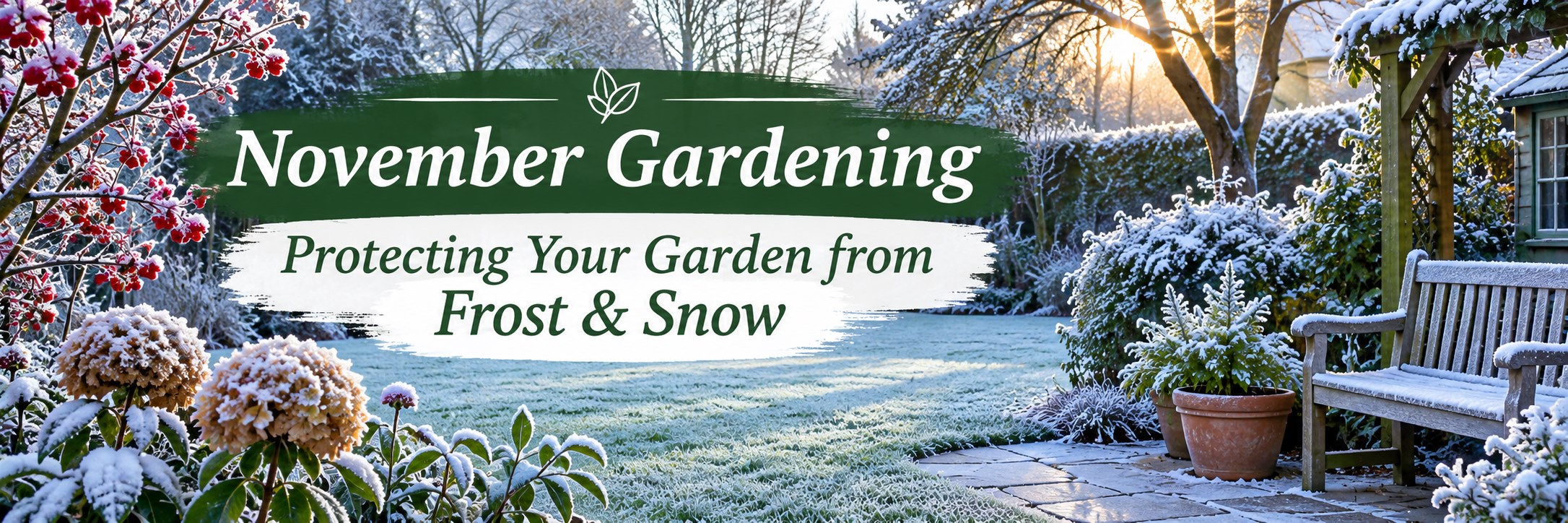
Protecting Your Garden from Frost and Snow
How to keep your garden healthy, safe and looking its best throughout the colder months.
As November arrives, temperatures begin to fall, daylight hours become shorter, and gardens across the UK face the challenges of frost, freezing winds and the possibility of snow. Although the main growing season has come to an end, there is still plenty to do to protect your garden and prepare it for winter.
Whether you have a beautifully landscaped garden, a well-maintained lawn or a collection of plants and shrubs, taking a few simple precautions now can prevent costly damage and help your garden flourish when spring returns.
1. Protect Your Plants from Frost
One of the biggest challenges gardeners face in November is the arrival of overnight frost. When temperatures fall below freezing, tender plants can suffer damage to their leaves, stems and roots.
To protect vulnerable plants:
- Use horticultural fleece: Cover tender plants and shrubs during particularly cold nights, ensuring the covering is secure but allows air to circulate.
- Move pots to sheltered areas: Position container plants against a sheltered wall or move frost-sensitive varieties into a greenhouse or conservatory.
- Protect plant roots: Apply a layer of bark mulch or compost around the base of shrubs and perennials to help insulate the soil.
- Raise containers: Place pots on feet to improve drainage and reduce the risk of water freezing around the roots.
Remember that some plants are naturally frost-resistant, while others need extra protection. Knowing which plants are vulnerable can save you time and money.
2. Preparing Your Lawn for Frost and Snow
Your lawn may appear dormant during November, but the grass is still alive and needs protection.
Avoid walking on frosty grass. When grass blades are frozen, walking across them can damage the delicate plant tissue, leaving unsightly brown patches.
If snow arrives, allow it to melt naturally rather than attempting to remove it from your lawn.
Before the ground becomes frozen, remove fallen leaves to prevent them from smothering the grass and encouraging fungal problems.
November is also a good time to check lawn drainage. Areas that regularly become waterlogged may benefit from professional attention before winter conditions worsen.
3. Protecting Trees and Shrubs from Snow Damage
Heavy snowfall can place considerable weight on branches, particularly evergreen shrubs and conifers.
If snow begins accumulating, gently brush loose snow from accessible branches using a soft broom, taking care not to bend or damage them. Avoid disturbing branches covered in ice, as they can be extremely brittle.
Check trees for dead, damaged or unstable branches that could become hazardous during winter storms.
For larger trees, particularly those close to buildings, fences or public footpaths, consider arranging a professional inspection.
4. Keep Patios, Paths and Driveways Safe
Frost and ice can turn garden paths, patios and driveways into slippery surfaces.
During November, remove fallen leaves, moss and other debris that trap moisture and increase the risk of slipping.
Check that drainage channels and gullies are clear so rainwater can escape rather than collecting and freezing.
When icy conditions arrive, use a de-icing product suitable for your paving material. Some salts can damage natural stone, concrete surfaces and nearby plants, so always check the manufacturer’s guidance.
Well-maintained paving not only looks attractive but also makes your garden safer throughout the winter months.
5. Protect Outdoor Pots and Garden Features
Freezing temperatures can cause water trapped inside terracotta pots, decorative containers and certain garden ornaments to expand, leading to cracks.
Move delicate containers into sheltered locations, empty unused pots and ensure planted containers have adequate drainage.
Garden furniture should also be cleaned, covered or stored away where appropriate.
If you have an outdoor water feature, check the manufacturer’s winter maintenance instructions. Some pumps may need to be removed and stored indoors to prevent frost damage.
6. November Is a Good Time for Garden Maintenance
Although November may seem like a quiet month, it is an excellent opportunity to carry out essential garden maintenance.
Consider the following tasks:
- Clear fallen leaves from lawns, flower beds and pathways.
- Cut back suitable dead or damaged perennial growth, leaving some seed heads for wildlife.
- Remove weeds before they become established.
- Check fencing, gates and garden structures for damage.
- Clean and maintain gardening tools.
- Plant suitable bare-root trees, roses and shrubs when the ground is neither frozen nor waterlogged.
- Plan landscaping improvements for the coming spring.
Completing these tasks now will make your garden easier to manage during winter and give you a head start when warmer weather returns.
7. Don’t Forget Your Garden Wildlife
Winter can be a difficult time for birds and other wildlife, particularly when frost and snow make natural food sources harder to find.
Consider providing bird feeders, fresh drinking water and sheltered areas where wildlife can escape the cold.
Leave some undisturbed leaves and natural vegetation in suitable areas of the garden to provide habitats for beneficial insects and small animals.
Even a small garden can become a valuable winter refuge for wildlife.
Give Your Garden the Best Protection This Winter
November is the ideal time to prepare your garden for the challenges of winter. By protecting vulnerable plants, looking after your lawn, maintaining pathways and checking trees and shrubs, you can reduce winter damage and ensure your outdoor space is ready for spring.
Need help preparing your garden for winter?
Our experienced gardening and landscaping team can help with seasonal garden maintenance, lawn care, pruning, leaf clearance and general garden improvements.
Contact us today to discuss how we can keep your garden looking its best throughout the colder months.